Restaurant Cleaning · Las Vegas

Restaurant Cleaning Company

Detailed kitchen, cooler, dining area, and high-level cleaning built around your operating schedule and the condition of your facility.

✓Written cleaning scope ✓After-hours planning ✓Surface-specific methods
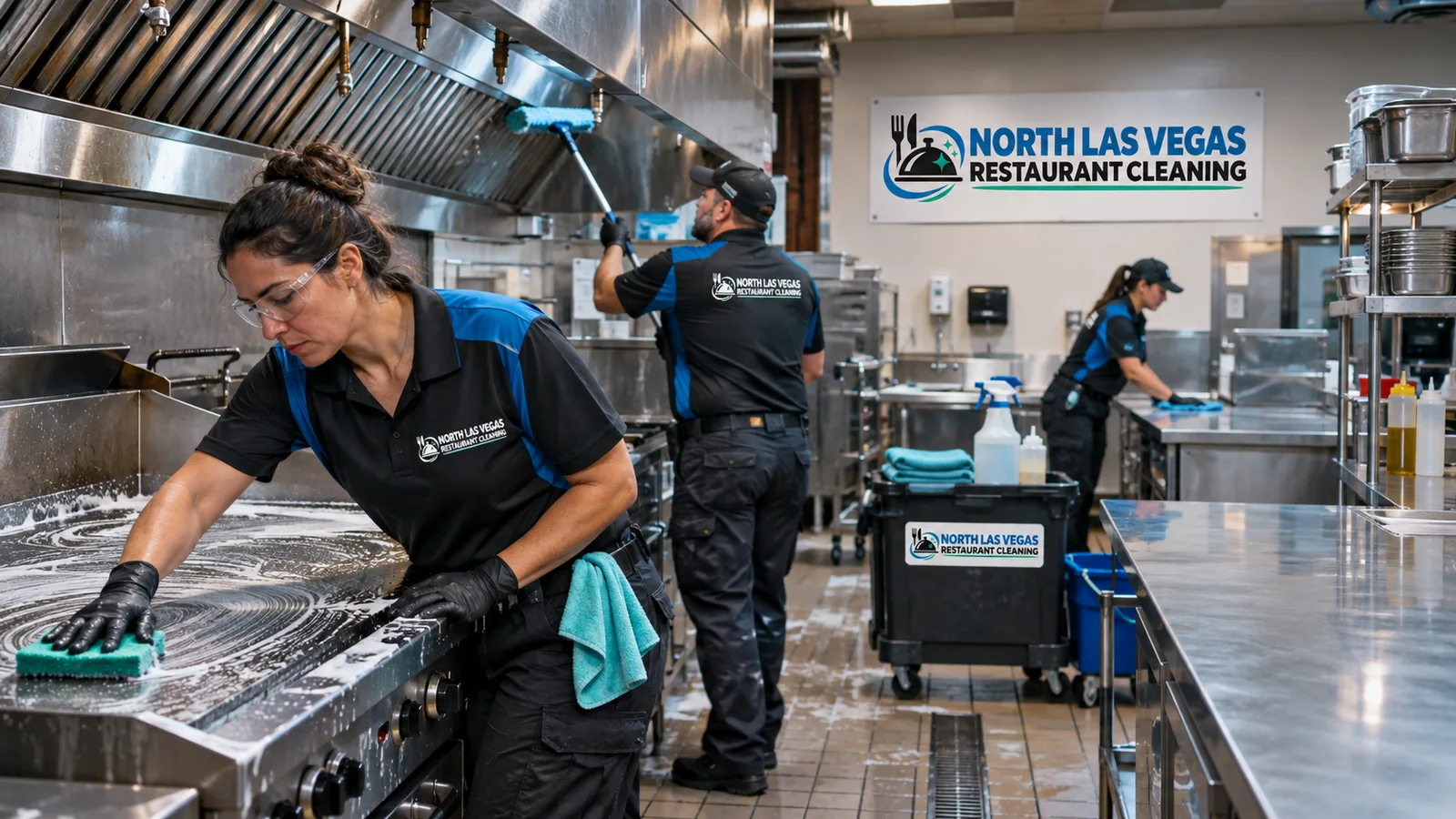
Trained commercial cleaning crew performing a scheduled deep clean around stainless steel equipment and food-contact areas in a Las Vegas restaurant kitchen

Detailed commercial care

A Restaurant Cleaning Company for Detailed, Planned Work

North Las Vegas Restaurant Cleaning handles the heavy, detailed work that routine closing tasks may not reach. Our restaurant service specialists serving Las Vegas, NV build each scope around the facility, its hours, the equipment present, and the areas that need attention. That may include a one-time reset before an inspection, a scheduled kitchen deep cleaning, cooler detailing, high dusting, or recurring deep-clean visits.

A useful proposal should identify the rooms and surfaces included, access requirements, exclusions, and the expected sequence of work. We review concerns such as grease buildup, floor edges, equipment access, food storage, ceiling-level dust, and the time available before the next shift. North Las Vegas Restaurant Cleaning is based at 2615 Branson Ave, Suite 4, Las Vegas, NV 89102, providing a local point of contact for restaurant cleaning projects in the Las Vegas area.

Request a Callback

Defined service scope

Professional Restaurant Deep Cleaning With a Defined Scope

Request a Callback
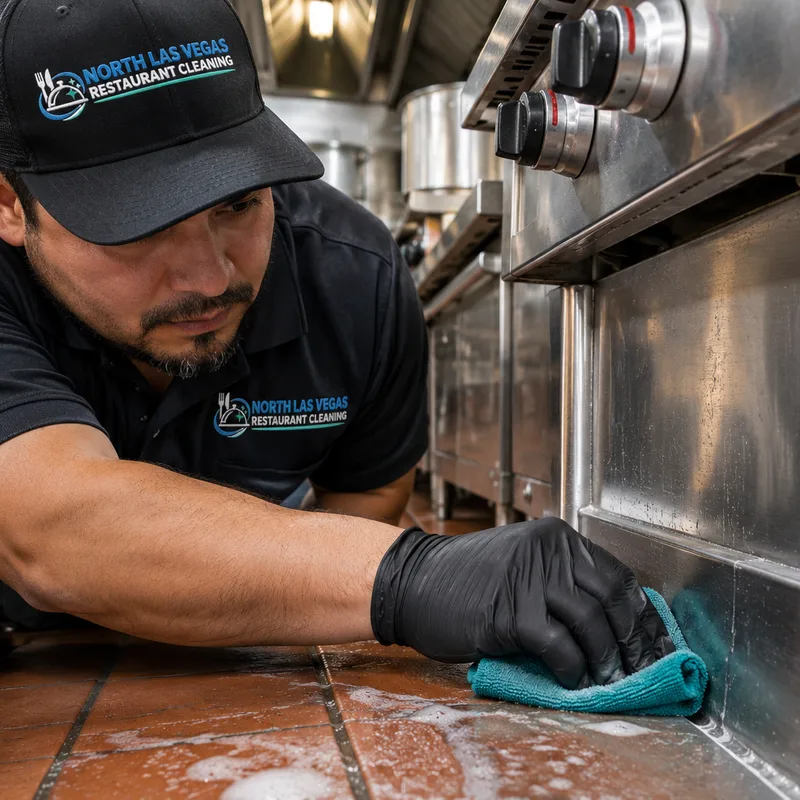
Restaurant cleaner detailing stainless steel equipment edges, backsplash seams, and the floor-wall junction behind a commercial cook line

Restaurant deep cleaning services should be matched to the material and soil. Degreasing a quarry-tile kitchen floor is different from cleaning stainless steel, sealed concrete, painted walls, rubber gaskets, or washable ceiling surfaces. Our team identifies those differences before work begins and selects methods appropriate for each area.

A typical restaurant detailed cleaning scope can address cook-line exteriors, backsplashes, prep surfaces, sinks, shelving, wall and floor junctions, baseboards, doors, washable walls, reachable pipes, and dining-room details. Movable equipment can be shifted when access and site conditions permit. Fixed equipment, energized appliances, hood interiors, ducts, fire-suppression components, and other specialized systems must be clearly discussed rather than assumed.

We also plan around cross-contamination controls. Cleaning tools and solutions used near restrooms, waste areas, raw-food zones, and ready-to-eat preparation areas should be kept separate. Food, utensils, and exposed ingredients need to be removed or protected before cleaning starts. After soil removal, food-contact surfaces require the correct rinse and sanitation steps before they return to use.

Planned cleaning coverage

Restaurant Deep Cleaning Services

Kitchen Deep Cleaning

Detailed cleaning can cover equipment exteriors, prep areas, shelving, washable walls, floor edges, drains where included, and accessible spaces behind movable units. Grease is loosened with appropriate dwell time and agitation before residues are rinsed or extracted.

Walk-In Cooler Cleaning

Walk-in cooler cleaning may include shelving, walls, doors, handles, floors, corners, and accessible gasket surfaces. Product movement, temperature control, electrical components, and drying time are reviewed before the scope is set.

High Dusting

High dusting targets accessible vents, pipes, ledges, light housings, beams, and ceiling-level surfaces. Access height, ladder placement, nearby food preparation, and falling-dust containment determine how the work is scheduled.

Dining and Guest Areas

Detailed work can address chair and table bases, booth edges, partitions, baseboards, doors, washable wall marks, floor perimeters, and other areas that affect the condition guests see.

Back-of-House Support Areas

Storage rooms, employee areas, service corridors, and waste-handling zones can be included when specified. Separating these spaces from food preparation work helps control tool movement and cleaning order.

One-Time or Recurring Service

A one-time deep clean suits a reopening, management change, inspection preparation, or accumulated buildup. Recurring work keeps difficult areas on a planned cycle based on use and soil load.

Commercial cleaning crew unloading labeled equipment for an after-hours restaurant deep cleaning assignment in the Las Vegas Valley

Local operating conditions

Commercial Kitchen Deep Cleaning in North Las Vegas and Las Vegas

Commercial kitchens in the Las Vegas Valley often operate long hours, leaving a narrow window for disruptive work. Properties near the Las Vegas Strip may also face loading, security, parking, elevator, or service-corridor restrictions. Downtown restaurants can have compact kitchens and limited staging space, while larger suburban dining rooms in Summerlin or Henderson may require more time for floors, booths, and guest-area details. These conditions affect crew size, equipment selection, and the order of work.

The region's dry climate also makes fine dust a recurring concern on overhead ledges, vents, pipes, and other high surfaces. High dusting in North Las Vegas should be performed before lower surfaces and floors so dislodged debris is captured during the later cleaning stages. If the restaurant remains open during part of the project, work zones and drying areas must be planned around staff movement.

Restaurant deep cleaning in North Las Vegas is quoted by actual conditions rather than a generic room count. Access behind equipment, grease thickness, ceiling height, cooler contents, floor condition, water access, and the time available all affect the plan.

Request a Callback

From review to turnover

How Restaurant Deep Cleaners Plan the Work

  1. Step 1 of 5

    Review the Facility

    We discuss the operating schedule, priority areas, access, available utilities, equipment that can move, sensitive materials, and any deadline tied to reopening or an inspection.

  2. Step 2 of 5

    Set the Written Scope

    The proposal identifies included rooms and surfaces, expected preparation, exclusions, timing, and any access equipment needed for high work. This keeps specialized systems and ordinary surface cleaning clearly separated.

  3. Step 3 of 5

    Prepare and Protect

    Food and utensils are removed or covered, work zones are established, and suitable tools are assigned to each area. High surfaces generally come first, followed by equipment, walls, fixtures, and floors.

  4. Step 4 of 5

    Remove Soil and Residue

    The crew applies the selected cleaner, allows appropriate dwell time, agitates buildup, and removes released soil. Methods may include hand detailing, wet extraction, controlled rinsing, scrubbing, or vacuum collection.

  5. Step 5 of 5

    Inspect Before Turnover

    Completed areas are reviewed against the agreed scope. Food-contact surfaces receive the required final treatment, floors are left to dry, and any access limitations or maintenance concerns are documented.

Compare written details

What to Confirm Before Hiring Restaurant Deep Cleaners

Ask for a scope that names surfaces rather than relying on broad phrases such as “full kitchen.” Confirm whether equipment will be moved, who disconnects appliances, whether shelves must be emptied, how high-level areas will be reached, and what must be ready before the crew arrives.

Confirm Every Work Area

A useful estimate states whether grease-heavy areas, walk-ins, dining spaces, restrooms, and exterior waste zones are included.

Match Chemistry to Materials

Degreasers need enough dwell time to release greasy soil, but stronger is not always better. Stainless steel, aluminum, painted surfaces, grout, rubber components, and food-contact materials can require different products and techniques. Safety Data Sheets should be available, and products must be used according to their labels.

Separate Specialized Systems

Kitchen exhaust ducts, hood interiors, fire-suppression systems, pest control, and equipment repair are specialized scopes. A restaurant cleaning company should state whether these items are excluded or handled by an appropriately qualified provider. Clear boundaries protect the restaurant and make bids easier to compare.

Request a Callback

Share the size of the restaurant, the priority areas, current condition, access limits, and preferred service window to receive a practical cleaning scope.

Request a Callback

Scope and scheduling answers

Restaurant Cleaning Questions

Clear answers about pricing, access, preparation, timing, recurring service, coolers, high dusting, and specialized exhaust work help you compare the right scope.

Request a Callback
How much does restaurant deep cleaning cost in Las Vegas?+

Restaurant deep cleaning is usually priced after reviewing square footage, soil level, included surfaces, access, and the service window. A lightly soiled dining area requires a different crew and method than a grease-heavy cook line, occupied walk-in cooler, or high ceiling. Photos can help with initial planning, but an on-site review is often the best way to confirm the final scope and price.

Can restaurant cleaning be completed after closing?+

Yes, after-hours cleaning can be planned when the available window allows enough time for preparation, cleaning, final treatment, and drying. Las Vegas Strip properties may have loading or security rules, while smaller Downtown kitchens may offer limited staging space. Those conditions should be confirmed before the schedule is set.

What must be done before kitchen deep cleaning begins?+

Food, utensils, smallwares, and personal items should be removed or securely protected before kitchen deep cleaning starts. The restaurant should identify equipment that may be moved, shut down, or disconnected and provide access to the agreed work areas. The exact preparation list is confirmed during scheduling.

Can you clean an operating walk-in cooler?+

Walk-in cooler cleaning may be possible while the unit remains in service, but food protection, product movement, safe working temperature, moisture control, and electrical components must be considered. Shelving may need to be cleared in stages. The condition of gaskets, fans, drains, and refrigeration equipment is documented rather than treated as a repair.

Is high dusting included in restaurant detailed cleaning?+

High dusting is included only when it is listed in the agreed scope. Ceiling height, surface type, ladder or lift access, and the presence of exposed food areas affect the method. In the Las Vegas Valley's dry climate, overhead ledges, pipes, vents, and light housings can collect fine dust and should be cleaned before lower surfaces.

How long does professional restaurant deep cleaning take?+

A focused area may be completed within one service window, while a large or heavily soiled facility may require multiple shifts or phased work. Crew size, equipment access, grease buildup, cooler contents, high dusting, and floor drying all affect timing. A schedule can be confirmed after the facility and scope are reviewed.

Do you provide recurring restaurant deep cleaning in North Las Vegas?+

Recurring service can be arranged for areas that need more than daily closing care. The interval depends on cooking volume, operating hours, menu, foot traffic, and the rate at which grease or dust returns. Each visit should follow a defined checklist while allowing priority areas to change as conditions change.

Does restaurant cleaning include hood and exhaust duct cleaning?+

Hood interiors, exhaust ducts, fans, and fire-suppression components should not be assumed to be part of general restaurant cleaning. These systems require a clearly defined specialized scope and may require qualified providers. Equipment exteriors and accessible surrounding surfaces can be listed separately in the cleaning proposal.

Start with a clear scope

Plan a Cleaner Restaurant From the Kitchen Out

Tell North Las Vegas Restaurant Cleaning which areas need attention, when the work can occur, and what conditions the crew should expect. We will help define a clear scope before cleaning begins.