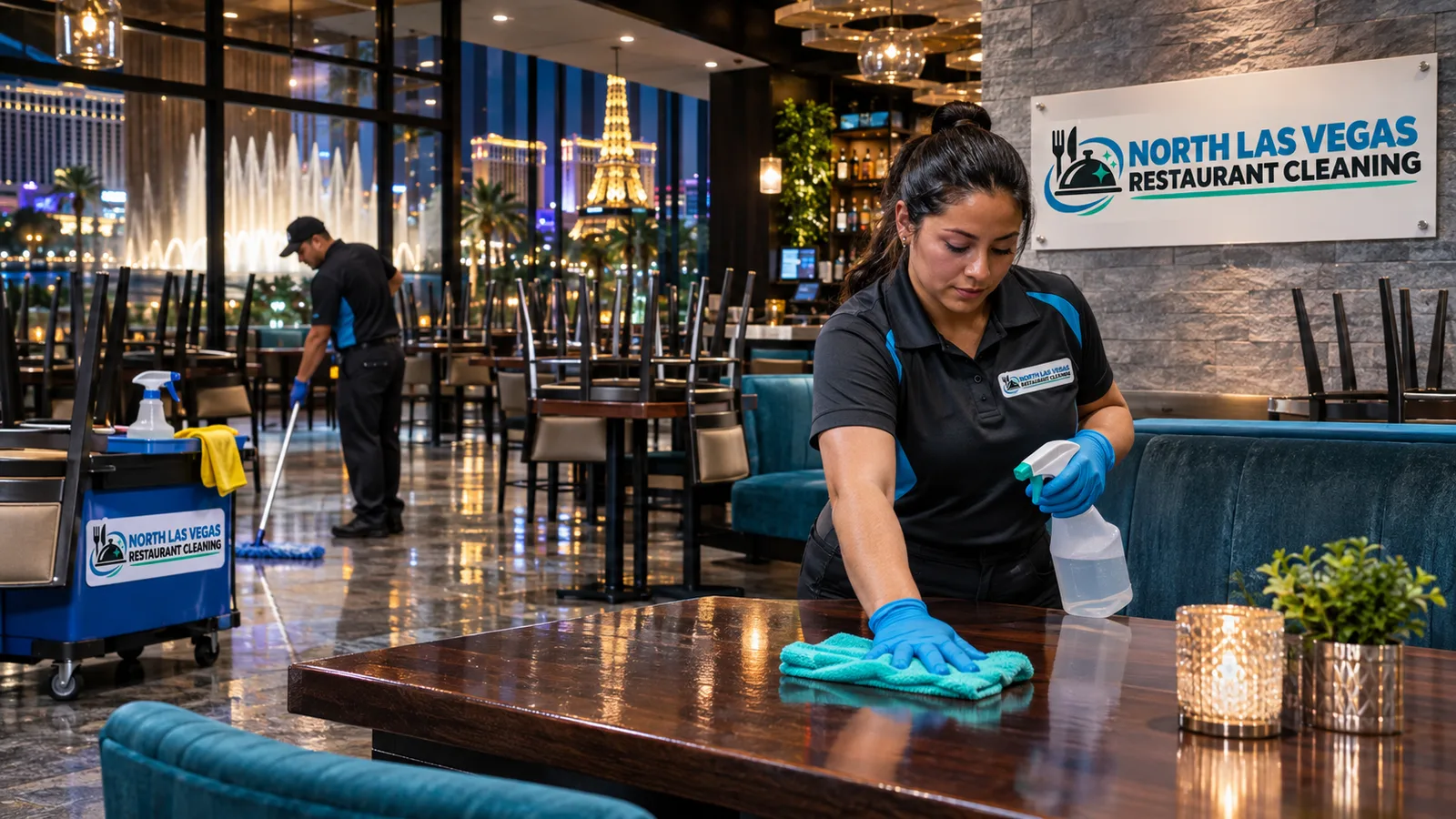
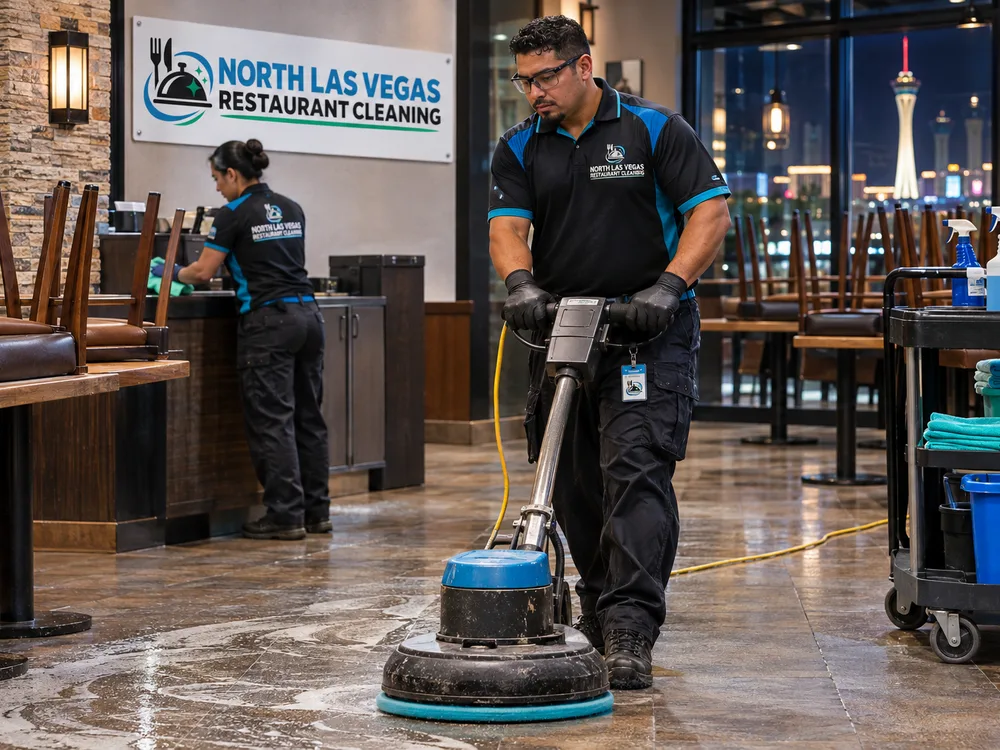
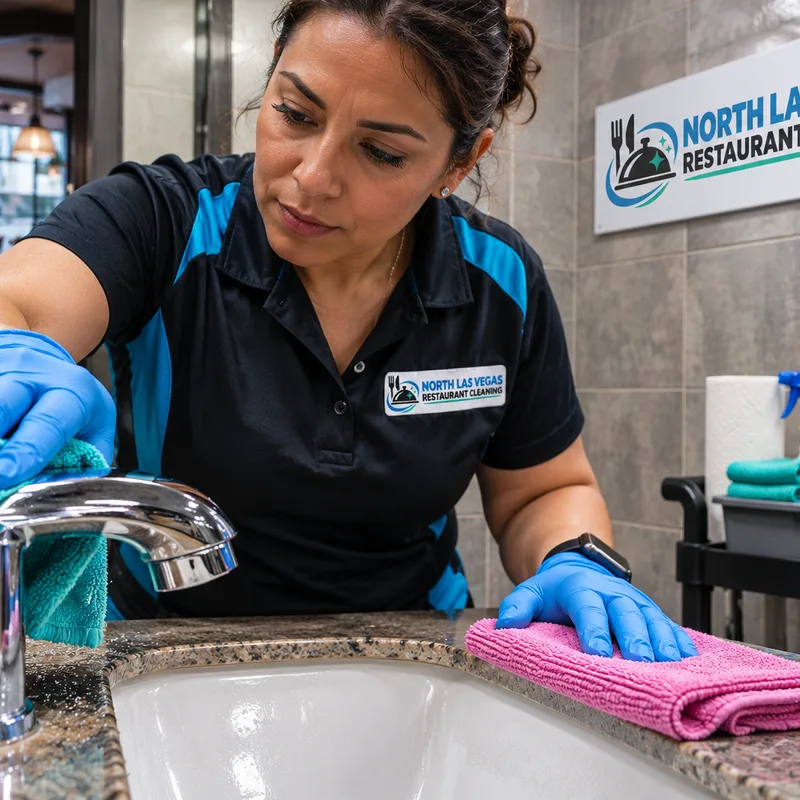
A complete scope follows the way soil moves through the restaurant. Dining rooms collect crumbs, spills and tracked-in grit. Kitchens add grease and food debris. Restrooms require separate tools and chemicals to reduce cross-contamination. Cleaners should work from cleaner areas toward dirtier areas, use color-coded cloths or tools where appropriate, and change mop solution when it becomes soiled.
Dining work can include wiping tables and chair touchpoints, spot-cleaning partitions, emptying waste, vacuuming carpet, and sweeping or damp-mopping hard floors. Bar service may cover counters, exterior equipment surfaces, floor mats and the floor beneath movable items when access is provided.
Kitchen cleaning is based on an agreed list. Common tasks include degreasing washable exterior surfaces, cleaning prep-area floors, wiping splash zones, emptying waste and cleaning accessible areas beneath movable equipment. Exhaust hood systems, ducts, rooftop fans and internal cooking equipment require specialized procedures and should not be assumed to be part of routine restaurant janitorial cleaning.
Las Vegas dust can enter through busy doors and loading areas, while high guest turnover increases soil around entrances and service routes. Restaurants near the Strip often need work sequenced around late service and overnight deliveries. Downtown properties may have tighter loading or access arrangements. In Summerlin and Henderson, neighborhood restaurants may close earlier but still need the same dependable handoff before morning prep.